Glimpse
How do you translate abstract human emotion into tangible design requirements?
My team spent a quarter answering this question by investigating the ideal pet adoption experience in the United States. Moving beyond standard transaction models, we set out to map the emotional, sensory, and bureaucratic variables that shape how humans and shelter animals build lifelong bonds.

Process
1. Data Collection
A. Observations at adoption centers
We conducted in-person, fly-on-the-wall observations across five physical pet adoption centers, sitting unobtrusively to document unprompted human-animal dynamics. This contextual inquiry involved logging critical environmental conditions, systemic bottlenecks, emotional shifts, and staff-adopter interactions to map the unvarnished operational and psychological realities of the shelter experience.
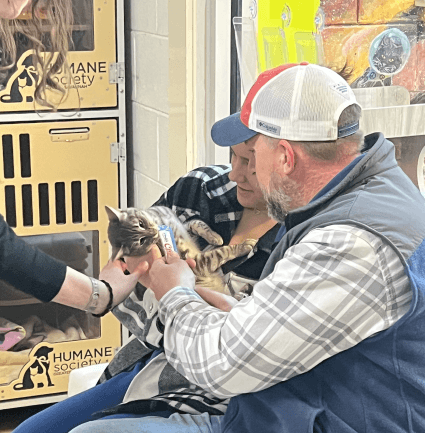


~ 340 Datapoints
B. Interview
We executed structured stakeholder interviews and comparative screening audits to dissect the cognitive and operational friction of the journey. This qualitative investigation mapped adopters’ emotional expectations against institutional workflows.


C. Sensory Cue Workshop
We facilitated this workshop utilizing visual, auditory, and tactile triggers to bypass cognitive filters and unearth adopters' subconscious needs. This successfully translated latent emotional desires into actionable design specifications.


Recorded Data
2. Affinitization
Above 3 Exercises gave us 1200+ data points, which brought us to Affinitization
Yellow Stickies - Literal facts, direct user quotes, or unprompted behaviors.
Blue Stickies - Translate the raw yellow data into the user's underlying psychological or emotional state.
Frame: "I feel [Emotional State] when/because [Trigger/Situation]."
Pink Stickies - High-level experience statements. They define the "ideal relationship" the user should have with the system, serving as the north-star goals for the product.
Frame: "It is [Adjective]" or "I am [Adjective]."
Green Stickies - Translate the ideal pink experiences into concrete, functional, and sensory specifications that the design must deliver.
Frame: "I want [Feature/Interaction]"
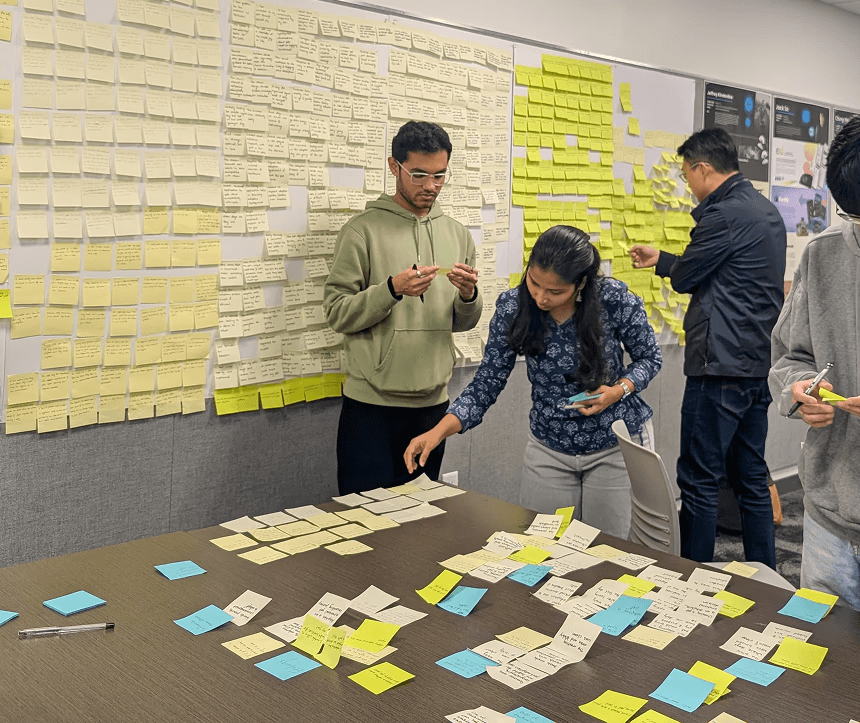

The Green Stickies
Some Interesting Findings
3. Framework
We developed a comprehensive experience framework by utilizing the Lextant Translation Matrix to distill raw contextual data into core experiential pillars categorized as I Am/I Feel and It Is statements.
These emotional pillars were mapped chronologically across overlapping circles representing the Before, During, and After adoption lifecycle, highlighting how user needs transition from emotional readiness and anticipation naturally (I am Excited) to operational clarity (It is Transparent) and, finally, to long-term integration (It is a Commitment).
By mapping the interface where adopter psychology meets institutional workflow, this framework acts as a strategic blueprint that transforms abstract human emotions directly into actionable system requirements. We delivered an in-depth explanation of the framework in the form of a Magazine.

4. Magazine
I chose this elective deliberately to move beyond visual design and gain hands-on fluency with MVPs, APIs, databases, and AI integration in a real product context.
I scoped the concept strategically : familiar enough (a children's app) to stay focused, complex enough (live AI + cloud storage + stateful UI) to learn.
The skills like localStorage-as-state, structured JSON prompting, and Supabase architecture are transferable to any AI-powered project.
Going forward, I'll bring this technical and AI literacy into UX roles where I can bridge design decisions and development constraints.
Solution Example
Tail Trail

TailTrail is a vibrant, modern double-decker bus transforming pet adoption.
Mobile & Interactive Outreach: Bus hosts adoption events, connecting pets with potential families in their communities. It increases exposure, awareness and good spontaneous decisions. (Adopter is Excited)
Transparent & Guided Process: QR codes provide instant pet details, supported by clearly identifiable staff for informed adoption decisions. (Adopter is Informed)
Responsible Pet Integration: Opportunities for walks and indoor play allow adopters to experience pet care and assess compatibility. (Adopter is Responsible)


Project Takeaways
Meaningful design begins by uncovering the desires and emotional touchpoints that go beyond needs, wants, and what people simply say to reveal what they truly feel.
Sensory Cue Workshop taught me that emotions often trigger and reveal more accurate information than words.
Synthesizing messy data into insights sharpened my thinking and helped me see beyond the fluff to the roots/emotions.
Realizing how inherently ambiguous research can be, yet how vital it remains for forecasting and understanding complex systems.

